
Among the many things of interest to be found on the walls of our parish churches up and down the country are those fairly large lozenge shaped Heraldic Paintings known as hatchment, usually painted on canvas within a wooden frame about 4 feet deep.
The hatchment was originally displayed over the front door of the house of a dead person, whose arms it portrayed, and remained there until the deceased person was buried in the local church, whence it was then conveyed and hung on the wall of the nave aisle until a tomb or monument was erected. Fortunately for us, many of these hatchments were not removed after the tomb was made.
The custom of painting hatchments started at the end of the seventeenth century and has continued until our time, although new hatchments are very rare indeed.
St Mary’s has several dating back as far as the 17th century, and in 2012, a major restoration programme was commenced.
The next one for restoration was in a delicate state and the only way to deal with it was to work in situ. This took place at the beginning of March 2014.
November 2012
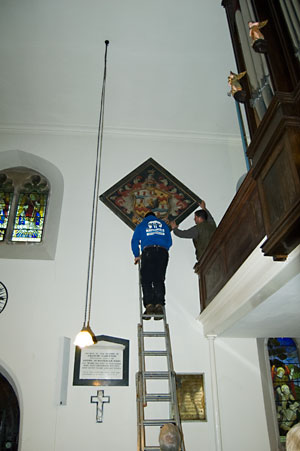
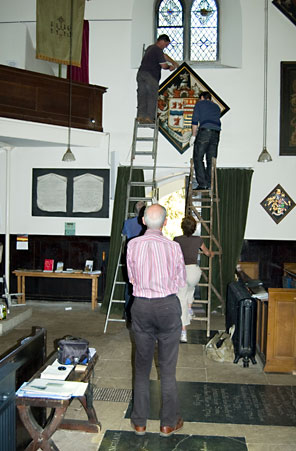
As can be seen in the photograph (right), it was a major exercise to safely lower the hatchment to the floor of the church. It took a good head for heights and strong arms to achieve the task!
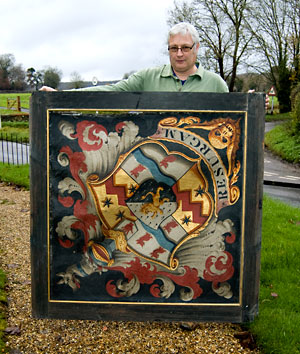
The other hatchment to be conserved (right) was also packed up and taken away. This was a Miller family hatchment, being an oil painting on canvas.
A grant from The Leche Trust went towards this project.
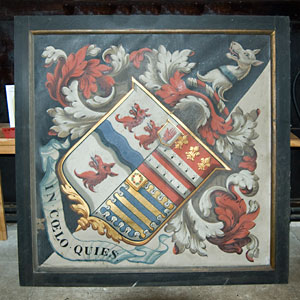
May 7th 2013 – the Hatchments return!
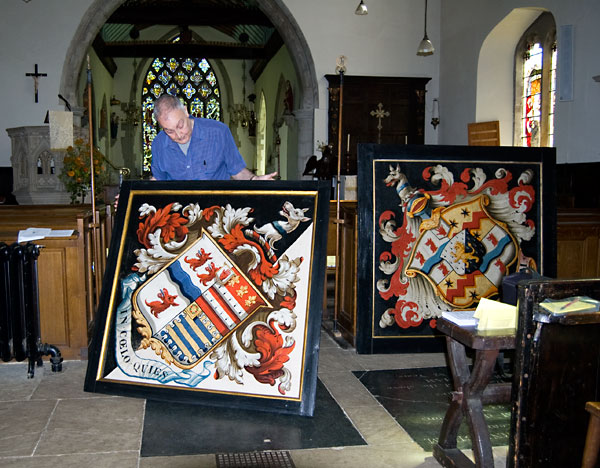
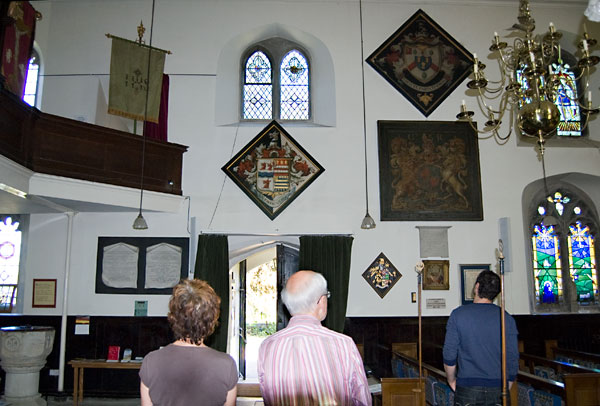
More pictures of the reinstatement follow below
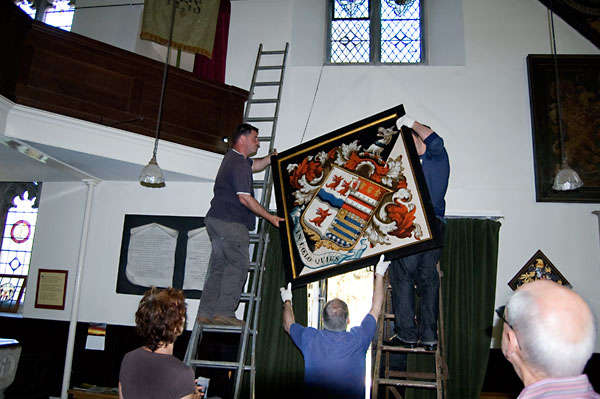
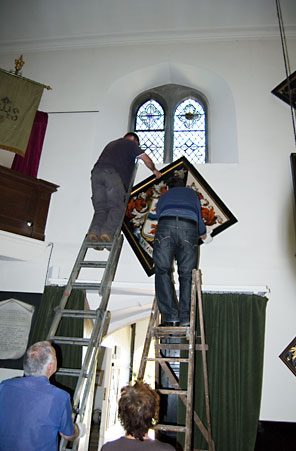
If the removal looked awkward, then re-hanging was a scary operation, needing a lot of strength as well as a head for heights.
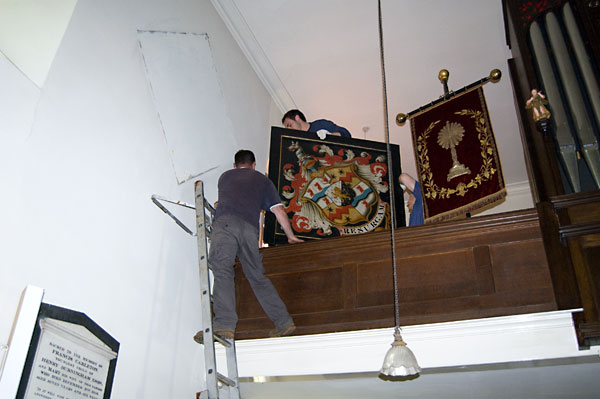
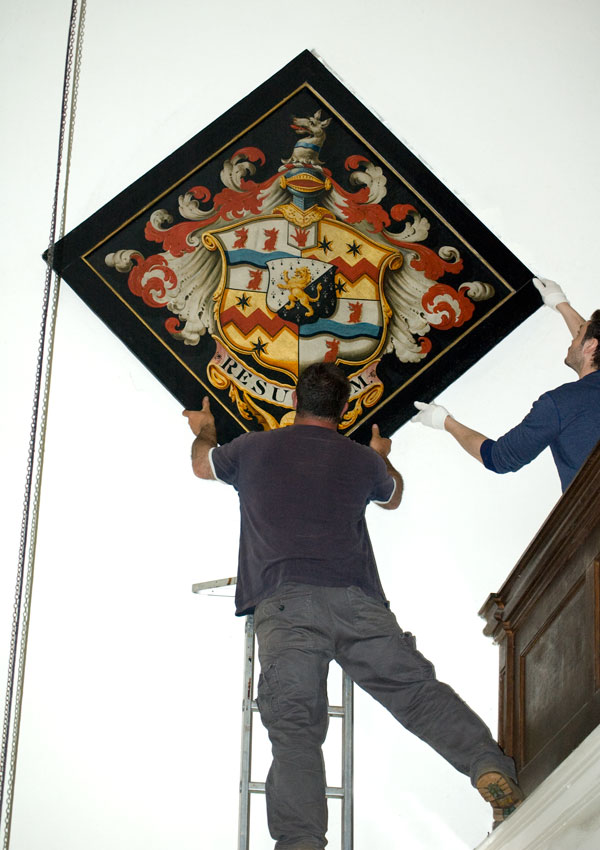
Then it was time to hang the other one.
March 2014
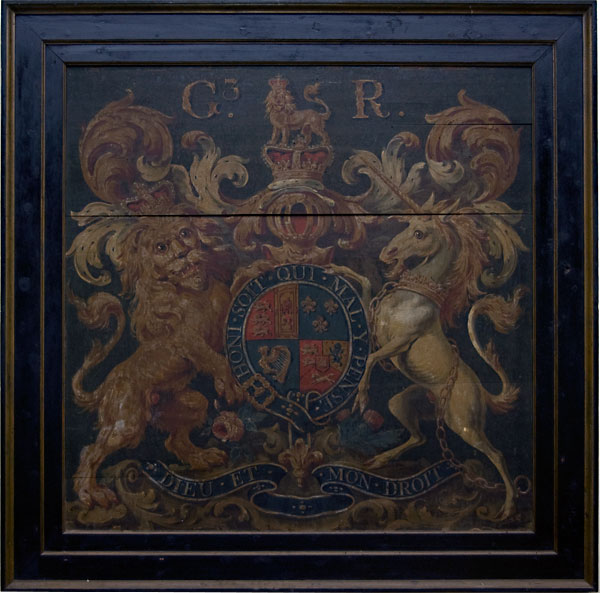
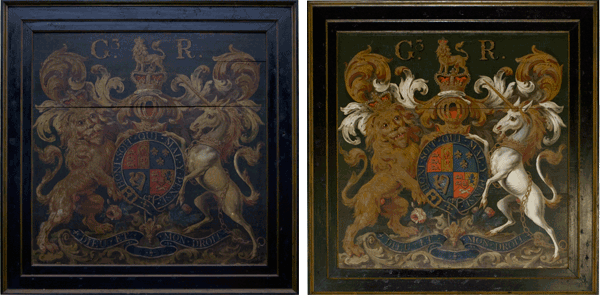
This particular item – a frame painting of the Royal Arms of George III – was somewhat fragile and rather dirty. It was also mounted half way up the North wall of the Church!
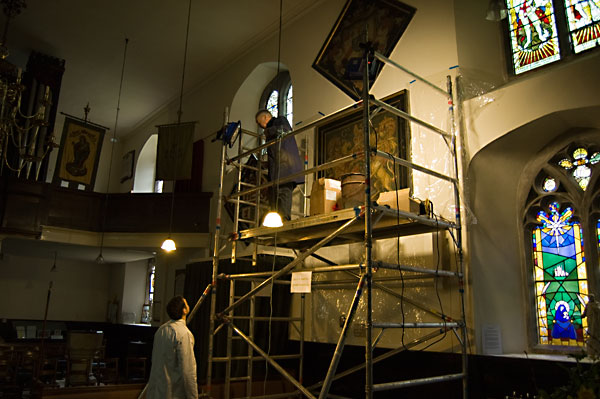
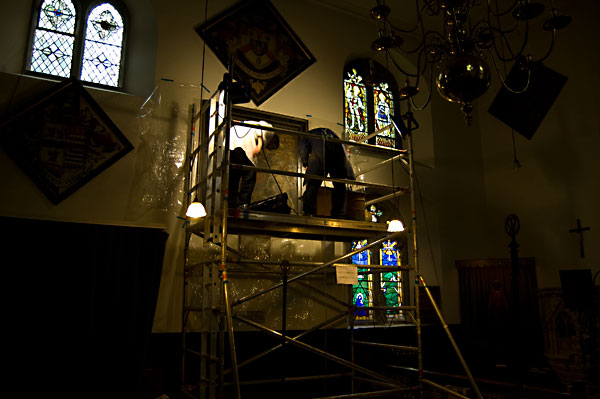
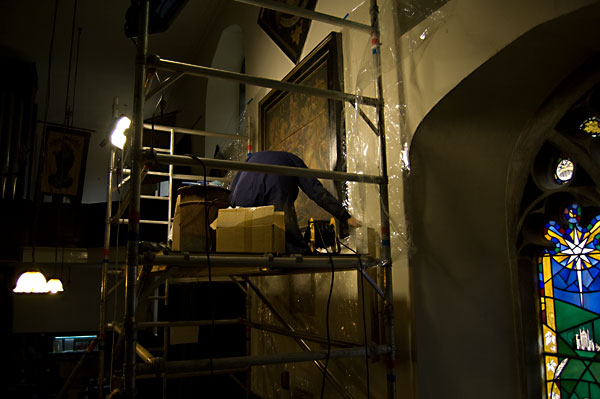
After nearly three days work, the difference was amazing!
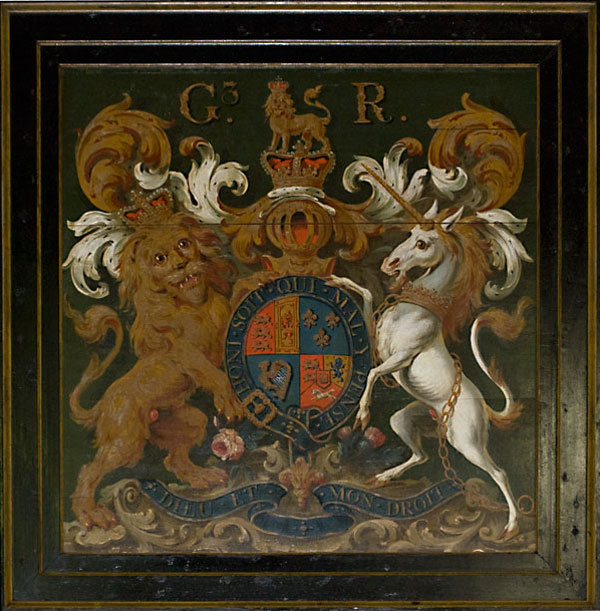
A before and after comparison shows the difference the cleaning made.
This work was made possible by a grant from the William and Jane Morris Fund