
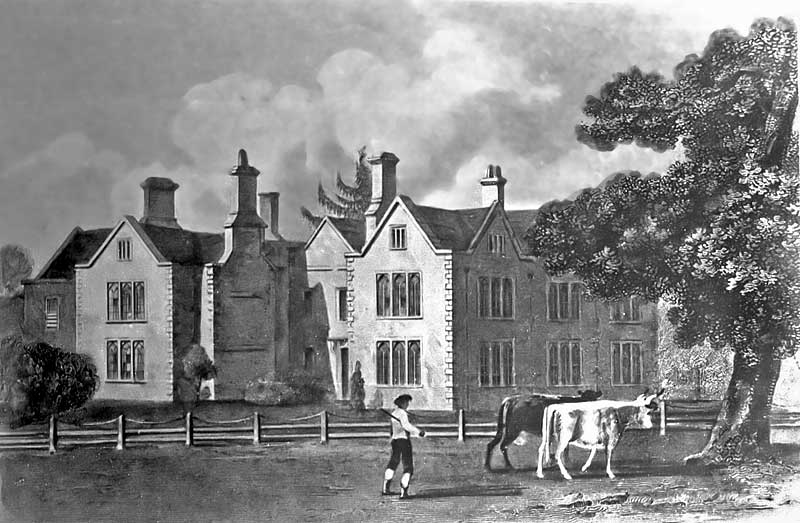
In 1536, at the Dissolution, the manor of Froyle came into the possession of William Jephson. The Jephsons also gradually acquired Brocas and Husseys, making the whole to a compact estate. In 1588 the Jephson family built Froyle Place (picture above) on the site of an older house.
A later picture (below) entitled “Froyle House, the seat of the Rev. Sir Thomas Miller” (which places it after 1770) shows little change. (You can see more recent pictures of Froyle Place by following the links at the bottom of the page)
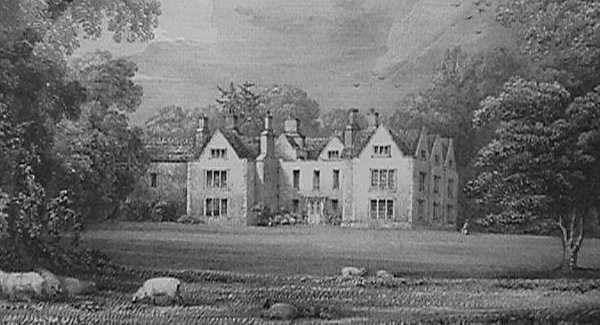
Froyle Place in 1912
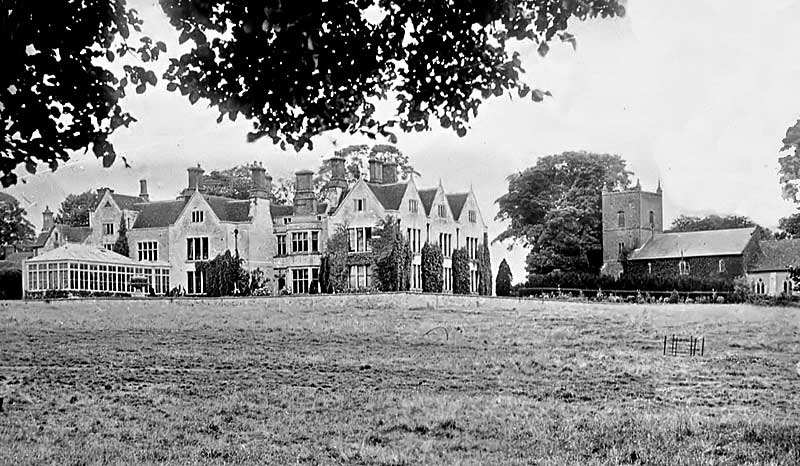
This imposing view of Froyle Place was taken somewhen in the early part of the 20th Century. We have little information about occupiers in the 1900s but we do know that Mr.F.B.Summers occupied Froyle Place from 1912. In 1922 he gave the Recreation Ground at Lower Froyle to the village. About 4½ acres were acquired by compulsory purchase from the Burningham estate. He also spent a lot of money on Alton Cottage Hospital, on a new operating theatre, etc. and he wished to be the first to be operated on there. It was an operation which was not absolutely necessary, but unfortunately he died, in January 1926 – a great loss to Froyle.
In 1922 Froyle Place was a “Hive of Industry”. In the house itself there was a butler, footman and quite a number of maids. Seven in the gardens, three chauffeurs and four keepers. The old ex-coachman attended to the dogs and poultry and if anyone threw a matchstick down in the yard he walked along and picked it up. The Racquet Court was fitted with a stage, scenery and footlights. Concerts and weekly dances were held here, with the old coachman in close attendance to see that everything was in order.
Froyle Place around 1906
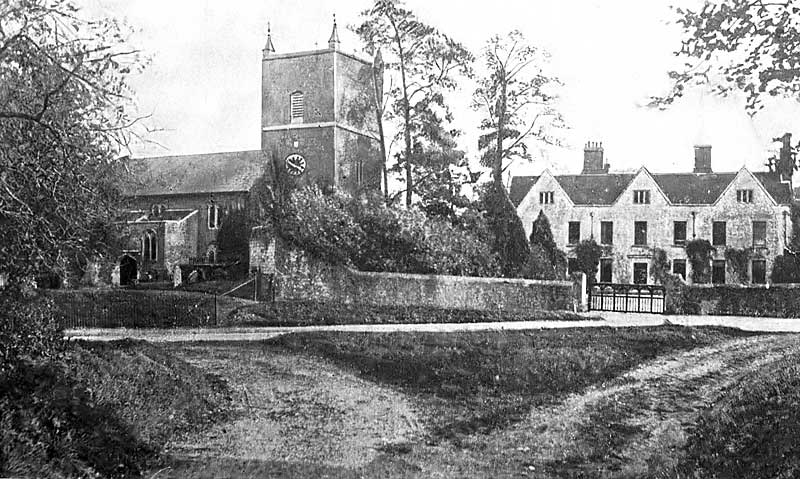
This picture, taken around the turn of the century, shows St.Mary’s Church with Froyle Place. This card was postmarked 14th May 1906, so the picture was obviously taken quite a bit earlier. This view appears on many different postcards, but what is so interesting about this one is the message on the back!
Postcard of 1906
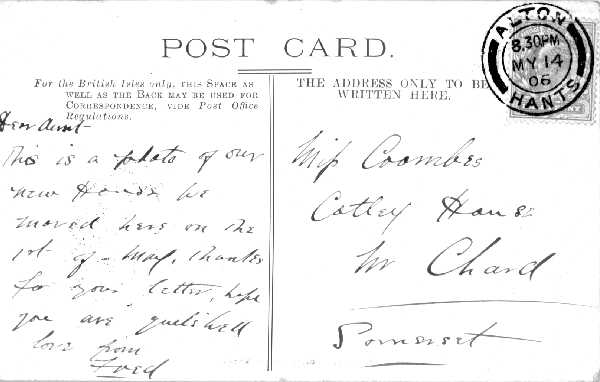
Our records do not yet show who was living at Froyle Place in 1906 – in the 1901 Census only the staff are shown as in residence. It was owned by Sir Hubert Miller, who lived at Shrubbery House, down in the River Wey valley near the main road, and was let to various tenants. The odd thing about this postcard is the address in Somerset it was sent to – “Cattleys” was a house in Upper Froyle which was demolished in the early 1800s and Froyle House built on its site – could Miss Coombes have once lived in Froyle?