
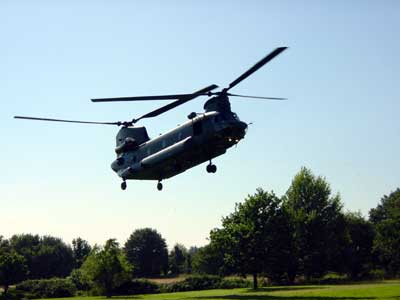
Welcome to a series of aerial views of Lower Froyle in the year 2002 by courtesy of 27 Squadron RAF Odiham (many thanks to SAC Brian Stubbington, 27 Squadron Air Operations). They were taken from Chinook ZH892 (pictured above) on the morning of Saturday, July 13th, just before 10am, as it prepared to land on the Recreation Ground in Lower Froyle to begin its visit to the 2002 Froyle Fête & Flower Show.
Below each view are the places marked on it. Photographs of each of the places follow the four views.
View 1: looking west
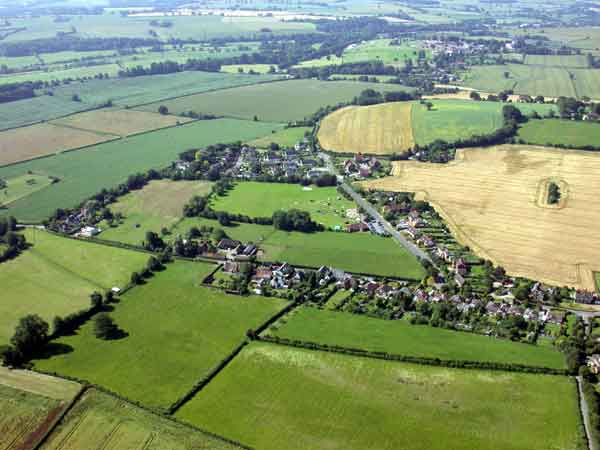
Places marked on this view: Sylvesters, Upper Froyle, The Prince of Wales, The Methodist Church, Hadwick’s Corner, Brecklands, Park Lane, Lower Froyle Shop, The A31, Porch Cottage, Holmwood Cottages, Westburn Fields, Barnfield Close, The Recreation Ground, The Village Hall, Bamber Lane Cottages, Bamber Cottage.
View 2: looking south
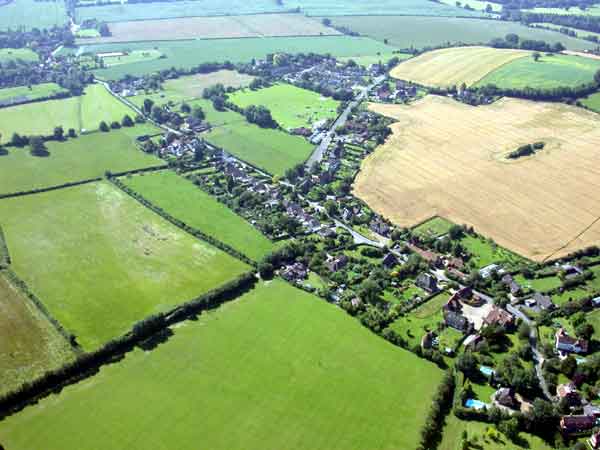
Places marked on this view: Beech Cottage, The Prince of Wales, Oak Cottage, Hodges Farm, Sylrock Farm, Site of St Joseph’s Church, Church Cottage, Ladyday Cottage, Aldersey Cottage, Sylvesters Farm, The Anchor, Highway Cottages, The village pond, Park Lane, Westburn Fields, Barnfield Close, Lower Froyle Shop, Hadwicks Corner, The Methodist Church, Brecklands, The Village Hall, The Recreation Ground, Bamber Cottage, Bamber Lane Cottages, Holmwood Cottages, Warren Cottage, Brocas.
View 3: looking north west
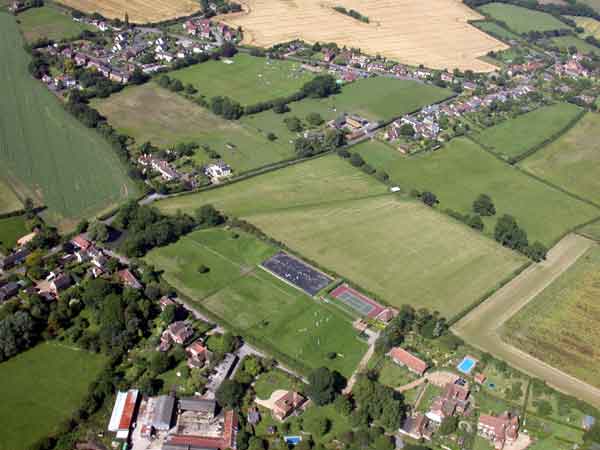
Places marked on this view: Husseys, Husseys Farmhouse, Village Pond, Bridge House, Park Lane, Sylvesters, Westburn Fields, Lower Froyle Shop, Barnfield Close, Brecklands, Hadwick’s Corner, Beech Cottage, Holmwood Cottages, The Methodist Church, The Village Hall, The Recreation Ground, Porch Cottage, Prince of Wales, Warren Cottage, Ladyday now Day Cottage, Site of St Josephs Church, Church Cottage, Highway Cottages.
View 4: looking north east
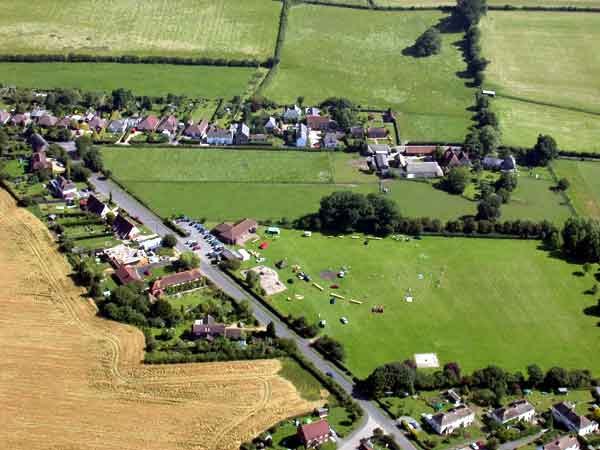
Places marked on this view: Sylvesters, Westburn Fields, Lower Froyle Shop, Barnfield Close, Brecklands, Hadwick’s Corner, The Methodist Church, Porch Cottage, The Village Hall, The Recreation Ground, Holmwood Cottages.
The places
The Anchor
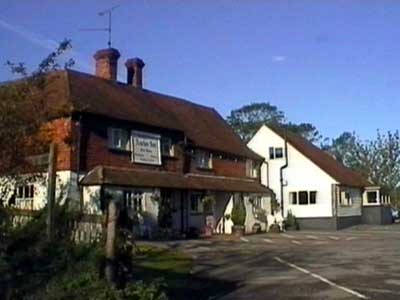
The Anchor was first mentioned in Parish records in 1806, but the building is much older than that. Meetings of the Overseers were held alternately at the Hen & Chicken and the Anchor.
Bamber Cottage
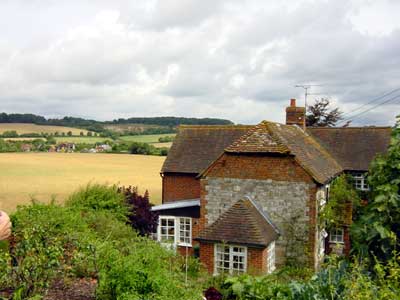
We don’t know much about this cottage except that it is not shown on the 1817 Ordnance Survey map, but it is there on the 1847 Tithe map.
Bamber Lane Cottages
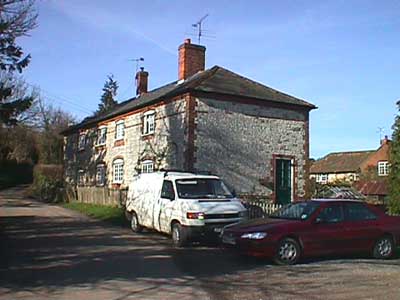
We don’t know much about these cottages except that they are not shown on the 1817 Ordnance Survey map, but are there on the 1847 Tithe map.
Beech Cottage
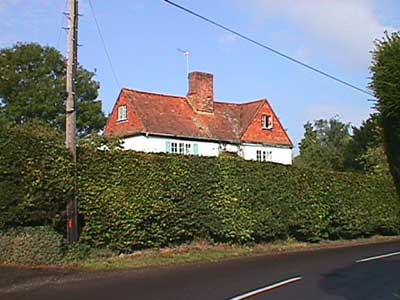
Beech Croft, as it was known, was described in the sale catalogue of 1915, as an “Exceedingly Compact Freehold Small-holding” – the excellent garden is clearly visible in the picture. The house dates from the early 1700s as it has a stone with the inscription R.C.1719. In the Tithe record of 1847 it is described as two cottages, and the Census echoes this. The name change to Beech Cottage is fairly recent.
Brecklands
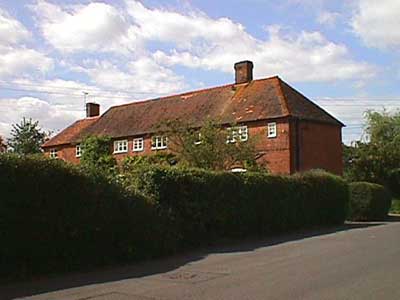
“Brecklands” was the old Workhouse in Lower Froyle. It was built sometime before 1793 as a workhouse and converted into cottages around 1835. Nowadays they have all been joined into one large house, although you can still see where some of the old doors were. Workhouse Cottages was a much bigger place than it is now with the present “Brecklands” being the North Wing of a much larger building. By 1871 the accommodation had been greatly reduced in size. Nowadays “Brecklands” is a single private house.
Bridge House
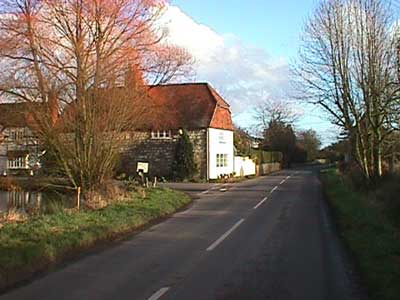
“Bridge House”, at the end of Hussey’s Lane in Lower Froyle, is situated just by the village pond. Before it became a private house it was a grocers shop, with the entrance in the wall facing the road, and then a sweetshop and tobacconists.
Brocas
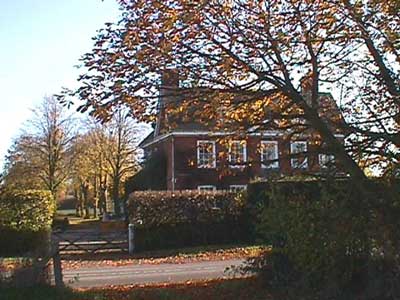
The name Brocas goes back many centuries in the records of Froyle. John de Brocas, a refuge from Gascony, took service with Edward III. He fought at Crecy (1346) and at the siege of Calais, and for his services he became Sir John Brocas and received manors at about seven places in Hampshire, including Froyle. Brocas was acquired by the Jephsons in about 1639 and sold to the Fiennes in 1652. By 1639 it had become part of the chief manor. The rebuilding was probably due to Joseph Tarrant, living here in 1750, or James, his son, who married Ann Westbrook in 1777.
Church Cottage
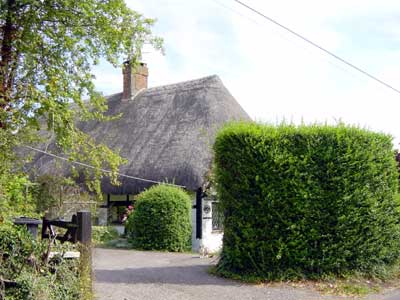
It’s name derives from the fact that St Joseph’s Church was next door, in what is now part of Church Cottage’s garden. The Church was demolished in 1967.
Froyle Village Hall
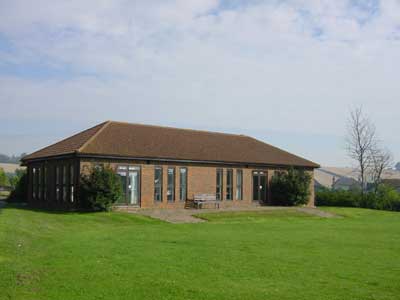
Built in 1984, it replaced a series of wooden buildings that had stood on or nearby the site since the beginning of the 20th Century.
Read more about Froyle Village Hall
Hadwick’s Corner
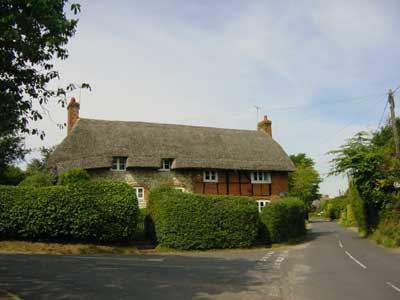
Henry Hadwick came to Froyle sometime after 1851 and initially lived at Brocas Farm and in one of the several cottages at the North end of Lower Froyle that were demolished around 1900. By 1881 he was at ‘Hadwick’s Corner’, although the cottages are not called that. They were previously known as Brocas Corner Cottages, as they were owned by Brocas Farm – that is probably how the Hadwicks came to live there. Even though they were later renamed 1&2 Ewelme they are still known as Hadwick’s Corner..
Read more about Hadwick’s Corner
Highway Cottages
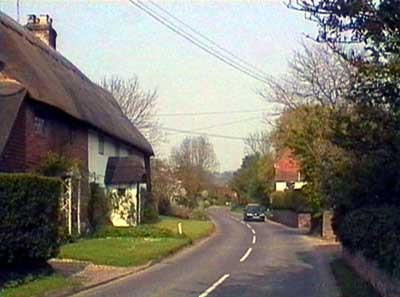
These were the cottages (on the left) belonging to Highway Farm. This was the building on the main A31 that is today known as “Highway House”. It appears in eighteenth-century records as “Highways Farm” and was re-built from designs by Mr. Walter Sarrel. In the distance is Park Lane, with “Bridge House” on the right. “Highway Cottages” today have basically the same shape but have been ‘reduced’ to two cottages and extensively modernised.
Read more about Highway Cottages
Hodges Farm
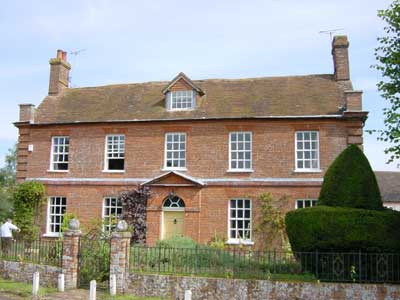
Hodges Farm, had its front to the road, added to a sixteenth-century house in 1766, and is the most accomplished piece of brick building in the village. There is record of a Richard Hodges in 1657, but it is doubtful what family was living there at the time of the re-building. The house was carefully repaired by Professor W.G. Constable.
Holmwood Cottages
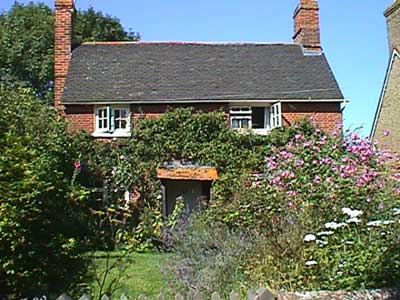
Little is really known about this cottage. It, and its companion (to the right) are clearly visible on the 1817 Tithe map, and were most likely built in the previous century.
Read more about Holmwood Cottages
Husseys
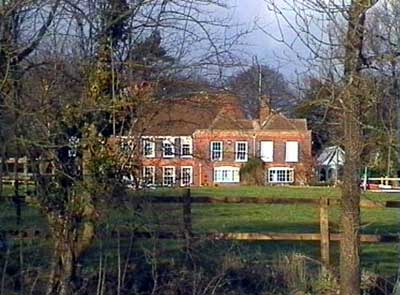
The tenement with the longest history in the village is that known since the thirteenth century as Hussey’s in Lower Froyle. The “manor” of Hussey’s is mentioned in 1262-63 as then acquired by Walter Hussey of his brother William. The Husseys of Froyle were possibly connected with the South Harting family flourishing in Henry III’s time. Parts of their house here may be incorporated in the existing building, timber framed with brick filling, of sixteenth-century date, with a rosy brick Georgian front probably added in 1764.
(Lady) Day Cottage
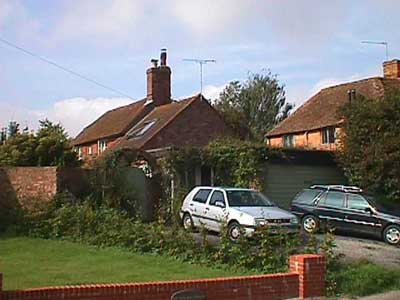
Originally called Ladyday Cottage we have a copy of the original deeds dated 25th March 1762 – we are not totally sure if this is the year the cottage was built, but there was in the 1700s quite a spate of building in the village.
Read more about (Lady) Day Cottage
Lower Froyle Stores
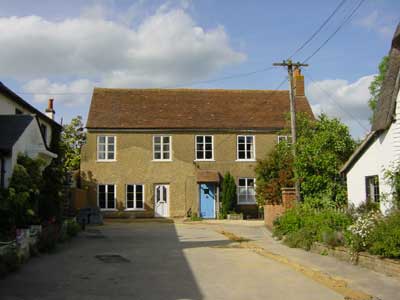
The building, like many in Froyle, has undergone little change until very recently. Owned by the Brownjohn family for nearly 100 years, it has an extension in front of the door and windows on the left which formed part of the shop. Since the late 1980s it has been an interior designers and an art gallery. Now it has all been converted into private accommodation.
Read more about Lower Froyle Stores
The Methodist Church
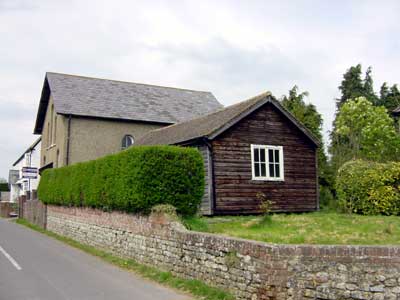
In March 1860 it was decided that Froyle should have a Methodist Chapel. In that same year a site was purchased from William Messenger and a start made on erecting the present Chapel. The Chapel was built of stone with brick quoins at a cost of £260 and a date, 1861, can be seen crudely inscribed on a stone in the north west wall of the building.
Read more about The Methodist Church
Oak Cottage
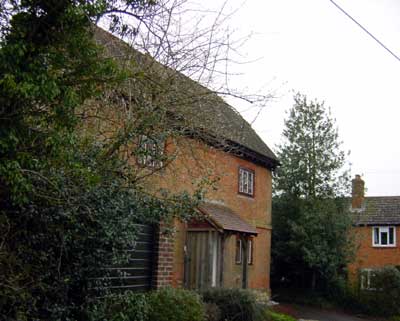
Another cottage dating back to the 1700s.
The Old Malthouse (formerly the Prince of Wales)
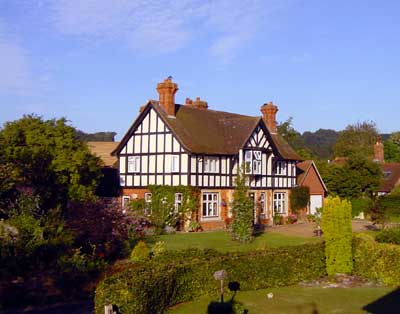
This was originally a public house – “The Prince of Wales” – built in 1912 and replacing a much older building on the same site (nearer the road). By 1998 the pub was no longer viable and was sold for conversion to a private dwelling.
Read more about The Old Malthouse
Park Lane
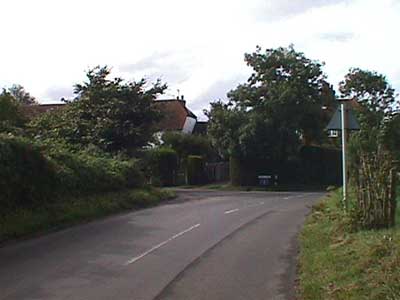
Park Lane has known several names in the past 150 years. It has been Lawrences Lane, Crouchers Lane, School Lane and now Park Lane.
Porch Cottage
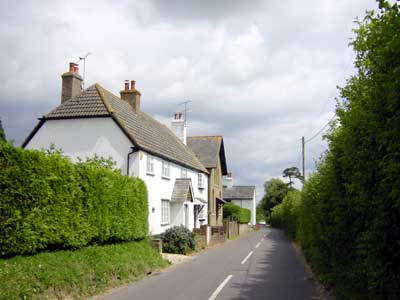
Originally three cottages, one of which was a grocer’s shop, a conversion was made in the 1950s which created two cottages out of the three. One was called “Twincot” (for obvious reasons) and the name was later changed to Porch Cottage.
The site of St Joseph’s Church
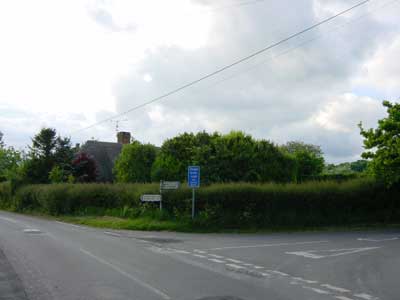
Adjacent to “Church Cottage” – the land is now part of their garden – this was the site of Lower Froyle’s Church for some 80 years. St Joseph’s Church was built by Sir Hubert Miller in the 1890’s on this small plot of land opposite the Prince of Wales Public House. He was concerned that all should be encouraged to attend church and the idea was to save the villagers of Lower Froyle the walk of a mile or two to St. Mary’s in Upper Froyle.
Read more about The site of St Joseph’s Church
Sylrock Farm
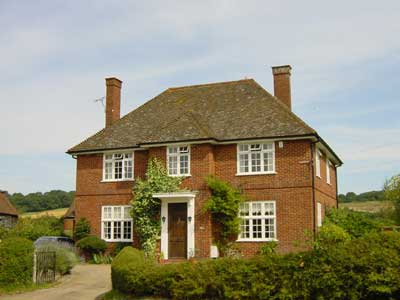
It was built in 1937 by the Westbrooks and as it was situated between the two farms which they had lived in, Sylvesters and Rockhouse, it was called Sylrock. It was designed by Reginald Kemp, and built on the lines of the other farms, it had an attic, a cellar and two staircases and something which the other houses didn’t have – a bathroom and indoor sanitation!
Sylvesters Farm
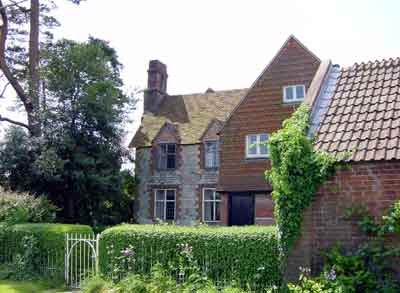
Sylvesters (also spelt Silvesters) took its existing form in 1674, according to a date let into its back elevation. This date presumably refers to the time when the wing was added at right angles to a timberframed early Tudor house, then, or subsequently, hung with weather-tiling on its north and west sides and at the back faced in stone. A Sylvester appears in the registers in 1670, and others of the name up till 1760 ; in 1800 Sylvester’s was one of Sir Thomas Miller’s farms.
Read more about Sylvesters Farm
The Village Pond
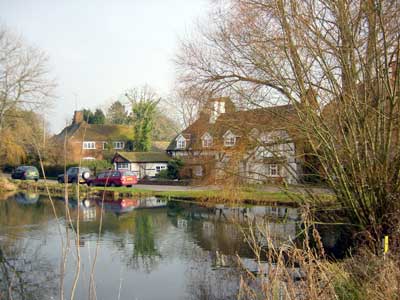
The Village Pond at the corner of Hussey’s Lane is the sole survivor of some eight ponds in Upper & Lower Froyle – the Tithe Map of 1847 actually shows 20 ponds of varying sizes in Froyle.
Read more about The Village Pond
Warren Cottage
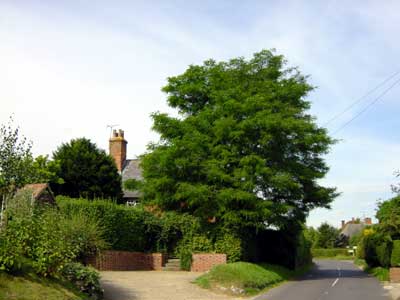
The cottage to the left is actually two – the right hand part, is nowadays called “Old Post Office Cottage” and was exactly that in the last century – the Post Office in Lower Froyle. On the left is “Warren Cottage”, and we know from the deeds that in the late 1700s the Clapshaw (or Clapshoe or Clapshew) family lived there – in particular Aquila Clapshoe, who was born in 1714 at Froyle. His son, also named Aquila, set up the Aquila Clapshoe workshop at Turnham Green, London, in 1780, making cricket bats.
Westburn Fields
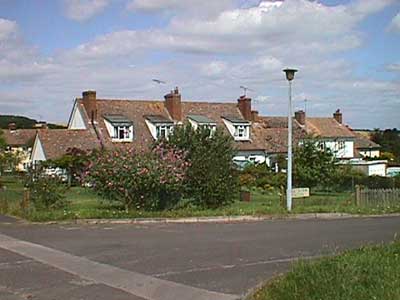
Built after the Second World War, the estate was called Westburn Fields, a name combining Westbrook and Burningham who were owners of the land in the past. Originally there were three pairs of whitewashed brick houses, four pairs of Swedish wood houses (shown here), four pairs of red brick houses and three pairs of bungalows for old people. Further houses were built in the 1970s.